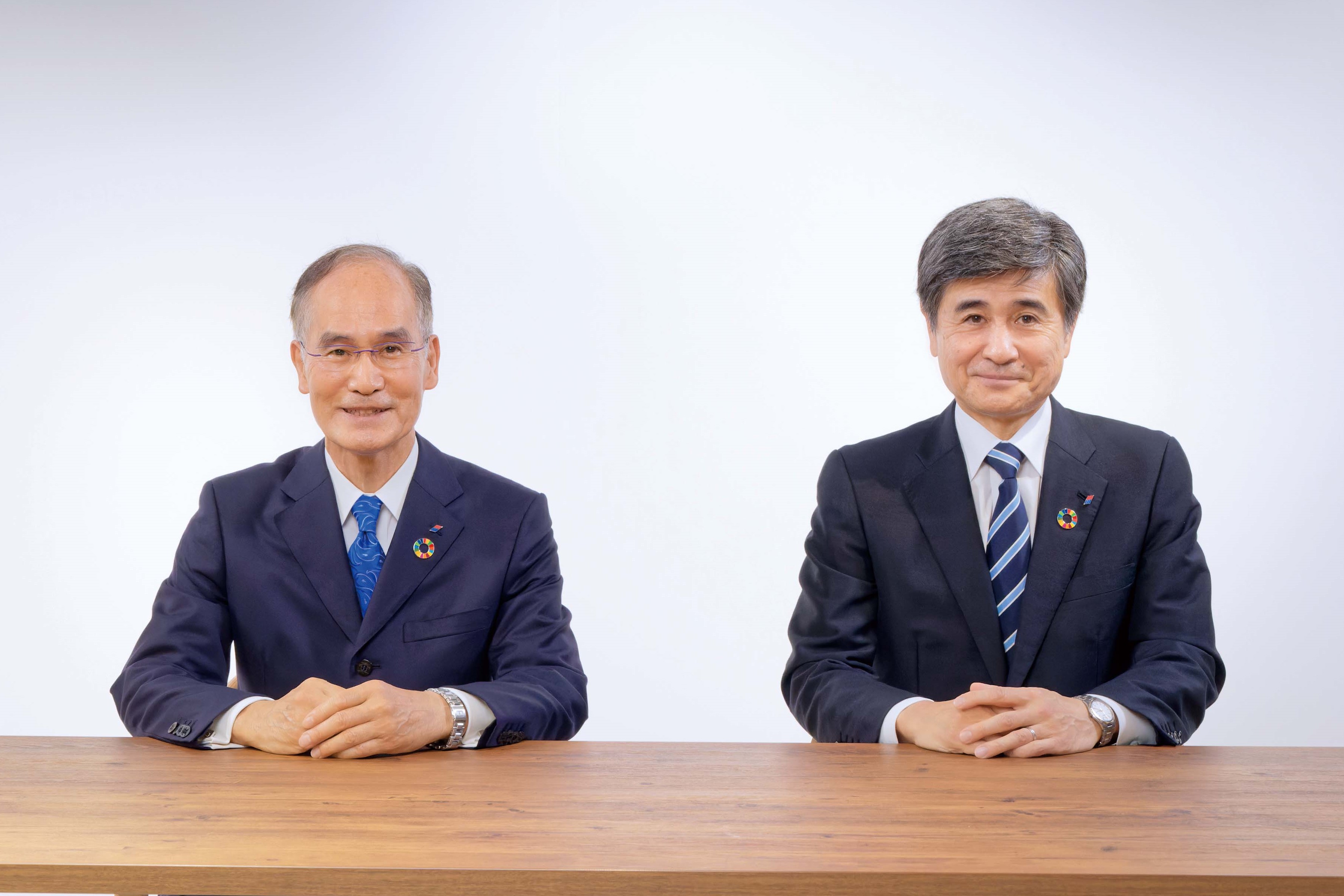
left: Outside Director, Chair of the Board of Directors, Chair of the Nominating Committee Mitsudo Urano
right: Outside Director, Member of the Nominating Committee and the Compensation Committee Takashi Nishijima
Amid the drastic change in business environment due to the expansion of infectious disease risk and climate change risk, the HTS Group has realized profit growth creating economic and social values through its business and evolved corporate governance that supports such growth. What should the Group focus on next in terms of governance to prepare for the shift to the next growth stage? Two independent outside directors held a dialogue.
Urano: In FY2020 when the entire world was facing the threat of COVID-19, I reacknowledged the logistics industry has very important mission no matter what the social situation is. The Group supports people's lives by providing logistics services to customers in a wide range of sectors including daily necessities such as foods, daily commodities, and medical supplies. If our operation is suspended, it could stop the flows of the supply chain in the world. The Board of Directors has monitored operation by strongly recognizing such importance and focused on maintaining stable business operation even amid the COVID-19 pandemic. In addition, under the new business concept of "LOGISTEED," the Board of Directors spent a great deal of time discussing SSCV, which we have been developing to realize "sustainable transportation services" and "zero-accident society," and made a significant progress in initiatives to secure safety and improve efficiency in the entire transport industry. While some fields experienced a decrease in revenues due to the COVID-19 pandemic, the Board of Directors actively discussed these emergency responses and the solution of social issues, which I believe contributed to producing good results. Under such circumstances, while I continued to focus on monitoring as an independent outside director in a Company with a Nominating Committee, etc., I also tried to give executive officers a supportive push in a crucial phase of decision-making. For example, SSCV, that I mentioned earlier, started off really small, but based on opinions of executive officers that there will be business opportunities to offer SSCV to transporters including passenger transport, I suggested we should accelerate our activities to share with the entire transport industry the values of "securing safety" and "improving efficiency" created by SSCV.
Nishijima: I became an outside director about a year ago in the midst of the COVID-19 pandemic, and what came to mind first was that logistics services are really essential to people's lives. In addition, I saw executive officers paying close attention to every detail of daily on-site operations and taking actions timely and appropriately, and I was impressed by the strengths of "Gemba" Power deeply rooted in the Company. I also highly value the fact that the Board of Directors not only focuses on current initiatives but also has in-depth discussions from medium-to-long-term perspective.
As for me, I focused on monitoring business execution as a member of the Nominating Committee and the Compensation Committee and was deeply involved in "offensive" management strategy toward a growth using my experience in corporate management. At the same time, in terms of "defense," I made suggestions on risk management and group governance. Especially because a measurement and control equipment manufacturer that I have been involved as a member of management focuses on not only manufacturing products but also providing solutions to support customers' value creation, I think that company shares a lot in common with HTS that provides comprehensive solutions in addition to delivering products. So, I will use my experience and insight that I have accumulated through management of the manufacturing company to support HTS's management.
Nishijima: The most notable feature is that the Board of Directors is highly independent*, and it is consisted of outside directors with very diversified backgrounds and careers. I recognize this ensures sufficient monitoring functions. One of the strengths is that the management shares a sense of purpose to "establish good governance for good management," with executive officers and outside directors having very active and open discussions. Under such atmosphere, outside directors sometimes ask sharp questions and give tough feedback, which I felt helps maintain a good balance of sound tension and unity. The Company actively provides information to outside directors, and I was able to visit many sites. If we spend more time and deepen discussions on essential themes such as long-term initiatives to increase corporate value, I believe we can make the Board of Directors even better.
Urano: I value that the Company's governance has evolved significantly in recent years. After it shifted to a Company with Committees in 2003, the Company was not able to take advantage of the system for a while. But now, all three committees are made up of a majority of independent outside directors and are operated with a smaller number of members, which makes them possible to conduct high-quality discussions and activities. For example, the Nominating Committee evaluates activities of each officer during the year and has an honest discussion on the structure of the next year. The Compensation Committee has introduced a completely new type of performance-linked stock compensation plan in consideration of all stakeholders in FY2020. Also, the Audit Committee functions effectively as members actually visit sites for audit in addition to reviewing documents.
As for the issue that I pointed out in last year's dialogue saying "outside directors cannot know in advance what was discussed in the Executive Committee," now outside directors can listen to the Executive Committee meetings online, which eliminated a large part of information gap. In addition, depending on the agenda item, the Board of Directors also discusses the same item that has been discussed by the Executive Committee, which makes me think that the Company now has a "very open relationship between the Board of Directors and the Executive Committee." I have served as an outside director in many companies, and I am proud that HTS's current governance is in a very good condition.
*Of nine directors, six are independent officers (as of June 22, 2021)
Urano: An improvement of capital efficiency has been one of the key themes in governance for the past few years, and the Board of Directors including me has been dedicated to it.The Company has focused on on-site education and initiatives related to ROIC tree (Message from the CFO P.22-23), and as a result, I think the concept is starting to take root. It's not 100% yet, but capital efficiency is now discussed at an early stage of the examination of investment projects, and I think we are certainly laying the groundwork for a culture to discuss capital efficiency routinely, for example, in the VC21 activities and as part of daily operations. I think this is wonderful.
Nishijima: One of our DX issues is that because we have been making full use of IT for a long time to develop 3PL business at full scale, there are "legacy assets" in "facilities," "culture," and "how to use." To advance transformation, replacement of legacy assets should take place in stages, not all at once. The management fully recognizes that, and it has almost completed "identifying issues" and "developing a roadmap for improvement and transformation." In addition, the management has a strong recognition of IT governance issues and is developing a cross-sectional framework and systems, including domestic and overseas group companies. As we have already developed a basic framework for catch-up and started to move toward the solutions of identified issues, I think our transformation is moving in the right direction.
However, DX should not be considered simply as an improvement or renewal of IT infrastructure. We should also consider transformation of corporate culture and climate, business model, and creation of innovation, so it requires quite extensive and deep efforts. Also, because IT is a "moving target" which is constantly evolving, we can't just proceed according to the framework once it is developed but need to be prepared to "keep transforming." In addition, if we run into an issue after starting the developed plan, we have to deal with it nimbly, and, in some cases, we may need to adjust or change the plan flexibly. The Company needs to enhance IT human resources who are the key to all of these initiatives. So, I think the Company's future task is to enhance skill sets and abilities required to keep up with the moving targets through both recruiting and development of human resources.
Urano: Partly because the major premise of the business concept "LOGISTEED" is a creation of an ecosystem with stakeholders in the first place, discussions at the Board of Directors have significantly changed to give due consideration to all stakeholders over the past year.
For example, we have discussed a dividend payout ratio with TSR, which is a KPI shared with shareholders and investors, in mind. We also introduced a compensation plan for officers that is closely linked to TSR and ROE. As for the businesses that solve social issues including SSCV I mentioned earlier, we have discussed how to solve issues as HTS closely paying attention to business partners and local communities. Also, when discussing new proposals for customers or new investments, we always emphasize "customer benefits." For employees, as VC21 activities make progress, we have more opportunities to discuss how to improve their work-life balance and satisfaction. And for business partners, the Board of Directors has discussed communication and other approaches to build win-win relationships with them.
Nishijima: I already talked about internal DX earlier, and as for external DX, we have started the implementation of core solutions including SSCV, Smart Warehouse, and SCDOS and their business development. They are making steady progress as projected in the Mid-term Management Plan "LOGISTEED 2021." But I think the aim of "LOGISTEED" is even higher and more comprehensive, that is "optimization of supply chain management" and "integration of a wider range of systems ("system of systems", etc.)." So, I think they will be our major challenges in the future. For example, the Group aims to realize new innovation beyond conventional logistics domain, and we need to clarify to stakeholders what economic and social values will be generated through the innovation and how it will be implemented through our business. By doing so, our ecosystem-driven growth strategy should be successfully embodied, and I am participating in various discussions for that purpose.
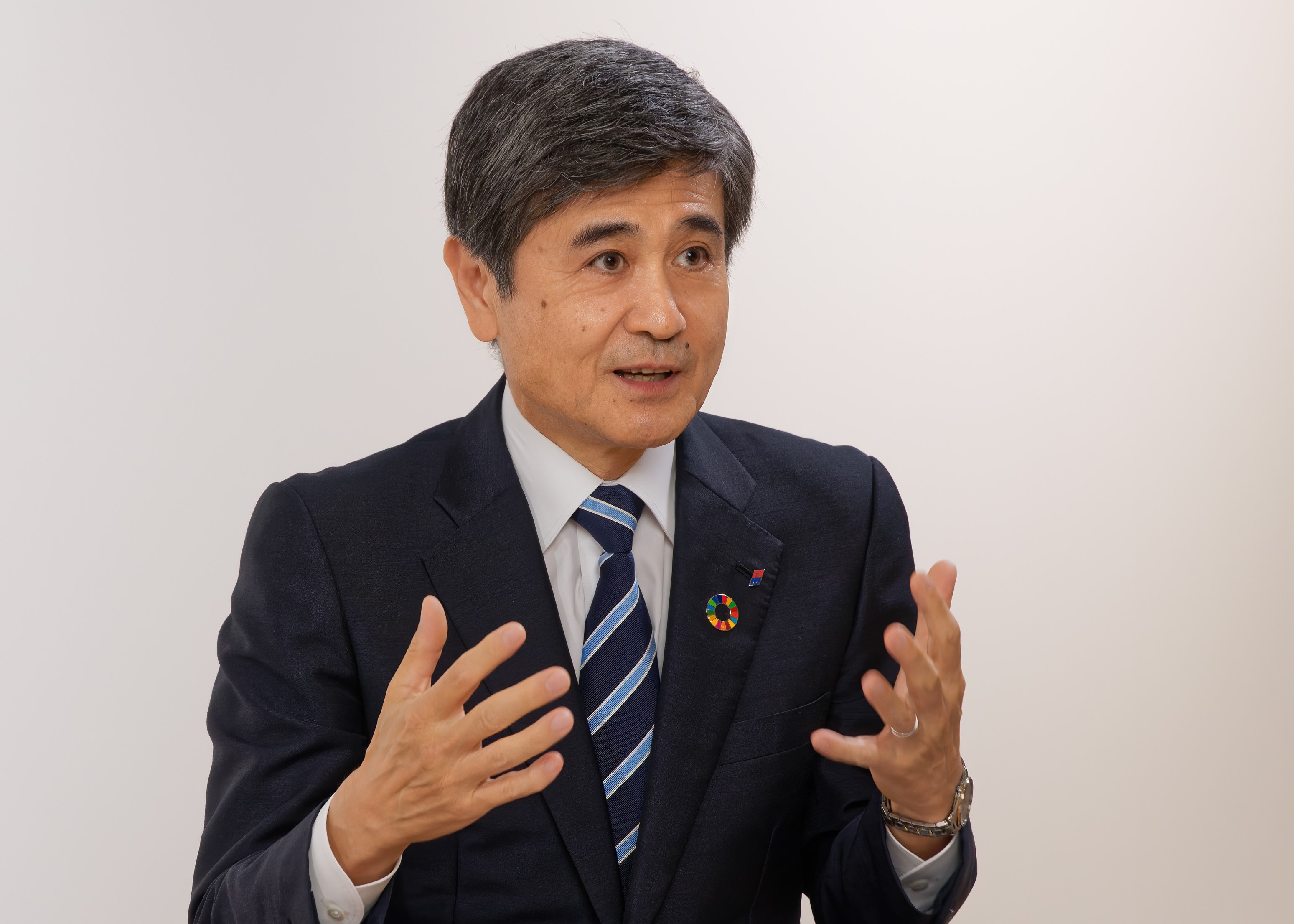
Urano: In the Mid-term Management Plan, the Company presented the amounts to be spent for M&As and capital policy, etc. in the future and clarified its intention to promote M&As to change the business portfolio. While executive officers have been deliberating on its details, I think there are a number of possibilities in both existing and new businesses.
First, the existing 3PL business has been actively promoting new initiatives such as EC platform center, but it may be difficult to find a high growth potential in Japan in the future as it is basically in the stage of cash cow (mature) of the domestic leading company. Freight forwarding business is recently posting strong performance partly due to external conditions, but it is unknown whether it's going to last in the long run. Heavy Machinery and Plant Logistics business currently has many domestic projects, while a high growth may be expected in emerging countries in the future.
In new businesses under the keywords "Finance, Commerce, Information, and Logistics," a business covering "finance" and "commerce" domains has already been launched. Although the business scale is still very small, it is possible that it may even grow to the level that it undertakes procurement and payment functions of customers.
Anyway, we need to constantly change the business portfolio to realize sustainable growth, and sticking to the basic policy to explore growing sectors while maintaining cash cows and withdraw from unprofitable businesses should eventually improve capital efficiency. In addition, a key in developing new businesses to explore growing sectors is how much risk we are willing to take. In the procurement undertaking business for customers I mentioned earlier, for example, we should expect a considerable risk at an early stage. While we continue the ROIC management, we, outside directors, might encourage executive officers to take a risk by changing WACC at a crucial moment when we think it's worth it.
Urano: So far, the Company has expanded global logistics through M&As, and I said, "we aim to formulate an integrated group governance" in last year's dialogue. But we will need to have much discussion on group governance from a global perspective, including a fundamental question such as "Is an integrated governance what we need?" For example, there are successful cases of an integrated governance such as global companies with a single product under a single brand. However, in case of a company running its overseas businesses with a region-contained business model like the Group, I think whether an integrated governance is the best choice should be discussed as a management issue.
Nishijima: This is just my impression that I got from discussions and reports from the Audit Committee in one year since I became a director, but considering our global logistics business is comprised of companies with different environment, business, and strengths that were grouped together through M&As, I think the Group needs to make further efforts to visualize such differences and identify/distinguish items that should be standardized and integrated. Having said that, I also have experience in managing a global company focusing on service business just like HTS with more than 100 group companies, so I know it is difficult to implement an integrated governance in all group companies around the world. I will seek an optimal solution for group governance taking into account business environment, strengths, and characteristics of customers in each region in discussions at the Board of Directors.
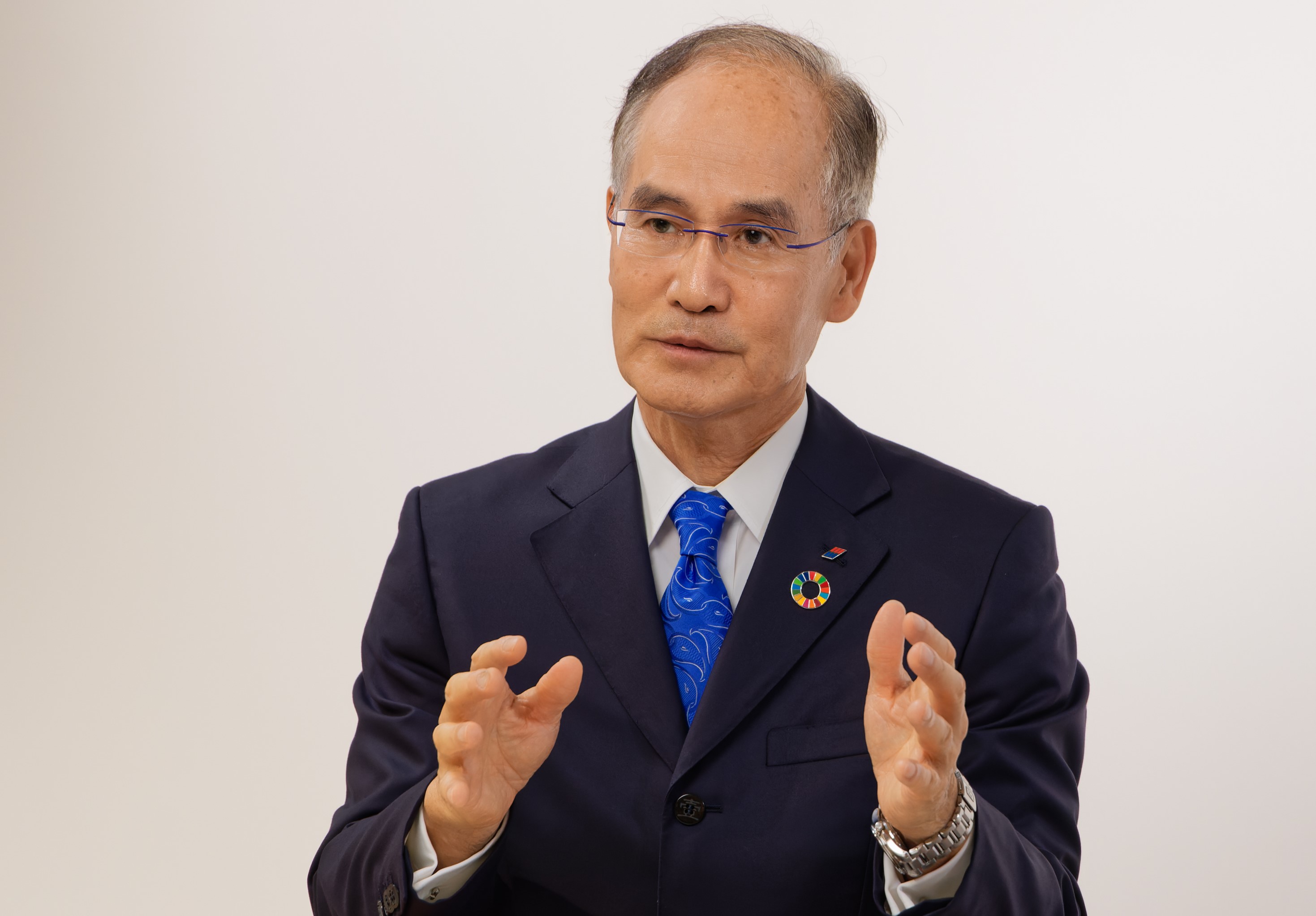
Urano: In order to actively promote ESG and SDGs initiatives, it is important that all members of the Group "fully understand" these concepts. From this viewpoint, for "Environment (E)," the Company has focused on reducing CO2 emissions from truck transport from early on and steadily produced results. For "Governance (G)," as I mentioned earlier, our initiatives have been evolving in the right direction. For SDGs initiatives, however, we may be able to further deepen our understanding if we become more aware that "human beings are also a part of the Earth system" when we think of 17 goals.
Nishijima: I think the Group should focus on "creating value" through these initiatives. For example, if employees "fully understand" them, their motivation and productivity may improve further. By setting lofty vision or high goals, we may be able to attract excellent human resources. In addition, if we make further progress with initiatives for "E" and "S," we can increase the number of customers, which then increases economic value. And I think it is very important to make a full effort to appeal all such "values" to stakeholders.
Before submitting your inquiry, it is necessary for you to read our Privacy Policy and consent to its contents. If you agree to its contents, please contact us through this inquiry channel. Note that any personal information obtained will be deleted once your inquiry has been answered, and we will not hold it on file after that.


