


Natural Capital (Pollution Prevention, Water Resources, Biodiversity)

The LOGISTEED Group works to identify and appropriately manage the dependencies and impacts of its business activities on natural capital (pollution prevention, water resources and biodiversity). Furthermore, in light of the recommendations of the Taskforce on Nature-related Financial Disclosures (TNFD), we are working to enhance the assessment and disclosure of risks and opportunities related to natural capital.
Action Policy
Basic approach
The Group recognizes growing global expectations for companies to address not only climate-related issues but also biodiversity and nature-related issues. We regard these issues as one of our highest management priorities and have identified "Contribute to a recycling-oriented society" as one of our material issues. We are working to reduce our impact on the natural environment through measures such as improving our resource recycling rate and preventing environmental pollution. We have also established "Promote Symbiosis with Nature and Environmental Communications" as one of our environmental policies and are advancing initiatives to conserve biodiversity and ecosystems.
Governance
The Group has established governance under its sustainability promotion framework to advance initiatives related to natural capital (pollution prevention, water resources and biodiversity). Specifically, important sustainability matters, including nature-related issues, are deliberated on and reported at management meetings and other forums, where policies and measures are determined and progress is monitored. Led by the Sustainability Promotion Department within the Corporate Strategy Headquarters, we advance measures in collaboration with Group companies in Japan and overseas, while pursuing continuous improvement through regular monitoring and evaluation. Furthermore, in line with the recommendations of the Taskforce on Nature-related Financial Disclosures (TNFD), we are working to identify risks and opportunities related to natural capital and enhance our governance framework.
Respond to the TNFD Recommendations
FY2025 Initiatives
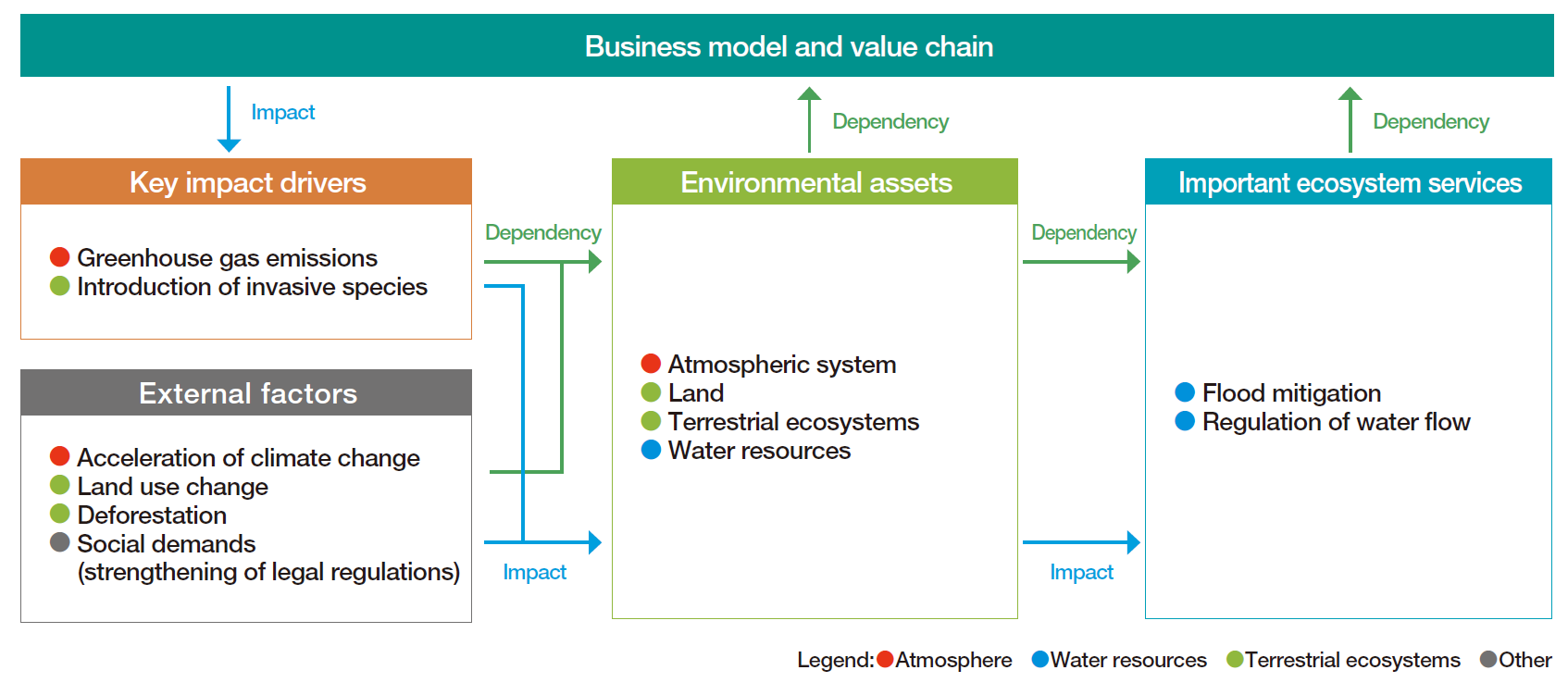
In FY2025, following the organization of heat maps using ENCORE,*1 we used the LEAP approach*2 to evaluate and identify our dependence and impact on nature in our business activities. In the scoping phase, to prioritize the sites for analysis, we evaluated overseas sites based on two axes: "size of exclusive area" and "amount of CO2 emissions," and selected 15 sites in Japan and 9 overseas sites based on criteria such as the top 10% of rankings. For the selected sites, in the "Locate" phase, we identified points of contact with nature (priority areas), and in the" Evaluate" phase, we conducted a survey to identify and evaluate our dependence on and impact on nature, and organized them as a diagram of dependence and impact pathways.
- *1ENCORE (Exploring Natural Capital Opportunities, Risks, and Exposure) is a tool jointly developed by the United Nations Environment Programme World Conservation Monitoring Centre (UNEP-WCMC), Natural Capital Finance Alliance (NCFA), and others to assess a company's "dependence on" and "impact on" the natural environment
- *2The LEAP approach consists of four components: "Locate", " Evaluate" (evaluation of dependence on/impact on nature), "Assess" (evaluation of nature-related risks and opportunities), and "Prepare" (consideration, planning, and preparation for disclosure).
■Dependence and Impact (Heatmap)

| Business | Value chain |
Operation Processes |
Dependence on nature | Impact on nature | |||||||||||||||
|---|---|---|---|---|---|---|---|---|---|---|---|---|---|---|---|---|---|---|---|
| Surface water |
Ground water |
Water source cultivation function |
Water quality |
Filtration | Mitigation of sensory impacts |
Climate regulation |
Flood and storm suppression |
Terrain stabilization and erosion control |
Use of marine ecosystems |
Air pollution |
Soil contamination |
Water pollution |
Solid waste |
Water resource usage |
GHG emissions |
(Noise and other) disturbances |
|||
| Warehouse | Procurement | Procurement of warehouses and ancillary facilities |
VL | VL | L | M | |||||||||||||
| Procurement of logistics equipment and facilities (material handling equipment, etc.) |
M | M | M | L | VL | M | VL | M | VL | M | H | H | H | H | H | M | |||
| Operation | Warehouse operations | VL | VL | L | M | L | VL | VL | |||||||||||
| Transport | Procurement | Procurement of large trucks | M | M | M | L | VL | M | VL | M | VL | M | H | H | H | H | H | M | |
| Operation | Truck transportation | M | M | M | L | VL | M | VL | M | VL | M | H | H | H | H | H | M | ||
| Rail transportation | M | M | M | M | H | H | L | L | H | H | |||||||||
| Sea transportation | M | M | M | VH | H | H | H | H | H | H | |||||||||
| Air transportation | H | M | M | M | H | L | L | H | H | ||||||||||
*VH: Very High, H: High, M: Medium, L: Low, VL: Very Low
■"Locate" phase: Evaluation results by type of area susceptible to impact at priority sites
| Japan Overseas |
Priority sites |
①Areas important for biodiversity |
②Areas with high ecosystem integrity |
③Areas with low ecosystem integrity |
④Areas with high physical water risk |
⑤Areas of importance to indigenous peoples and local communities |
|---|---|---|---|---|---|---|
| Japan | 15 | 13(86.7%) | 0 | 13(86.7%) | 7(46.7%) | 0 |
| Overseas | 9 | 5(55.6%) | 0 | 8(88.9%) | 5(55.6%) | 0 |
■"Evaluate" phase: Identification diagram of dependence and impact pathways
■Risks and opportunities
| Category | Items associated with heatmap |
Description | Risks and opportunities*1 |
Timeline*2 | Measures | |
|---|---|---|---|---|---|---|
| Risks | Physical | [Dependency]
|
|
Medium | Mid- to Long-term |
|
| Transition | [Dependency]
|
|
Medium | Mid- to Long-term |
|
|
| Opportunities | Resource Efficiency |
[Impact]
|
|
Large | Mid- to Long-term |
|
| Reputation | [Dependency]
|
|
Large | Long-term |
|
|
| Products and Services |
[Dependency]
|
|
Medium | Mid- to Long-term |
|
|
- *1Risks and opportunities listed primarily focus on items deemed to have a medium to large impact
- *2Mid-term: 2 to 5 years, Long-term: 6 years or more
Future response policy
Moving forward, we will continue to address the following unaddressed or undisclosed items regarding the analysis of nature-related issues using the LEAP approach.
(1) Quantification in the "Evaluate" phase: Consideration and implementation of the measurement and disclosure of TNFD recommended global core disclosure metrics through the quantification of dependencies and impacts
(2) Transition to the "Assess" phase: Consideration and implementation of the prioritization of nature-related risks and opportunities arising from identified dependencies and impacts
Targets and Performance
The Group has established relevant targets and metrics to systematically address material issues related to natural capital. We continuously manage and evaluate progress and incorporate the results into future measures to further enhance our initiatives.
Promoting green purchasing
We try to promote Green Purchasing when purchasing office supplies by choosing stationery made from recycled materials, recycled paper, etc.
Scope: LOGISTEED, Japan group companies*1
| Green purchasing rate*2 (FY2025) | Target | Result |
|---|---|---|
| Promoting the purchase of green products | 78.3% |
*1Excluding ALPS LOGISTICS group
*2Green purchasing rate: the ratio of office supplies purchased at the e-sourcing MALL (an electronic purchasing system) that are environmentally-friendly products.
Reduction of water consumption
Water used for car washing and dust control is also a limited resource, therefore we have been working to reduce the amount of water consumption by using this efficiently.
Scope: LOGISTEED, Japan group companies
| Reduction of water consumption intensity per floor space (FY2025) | Target | Result |
|---|---|---|
| YoY -1% | YoY -4% |
Reduction of copy paper
To protect forest resources, we have been working to reduce the amount of copy paper used by promoting paperless meeting materials.
Scope: LOGISTEED, Japan group companies
| Rate of reducing copy paper consumption (FY2025) | Target | Result |
|---|---|---|
| YoY -1% | YoY +23.7% |
Scope: LOGISTEED, Japan group companies
| Total amount of copy paper used (thousand of sheets) converted to A4 size |
FY2023 | FY2024 | FY2025 |
|---|---|---|---|
| 118,826 | 132,410 | 163,750 |
Initiatives
The Group applies its response to natural capital-related issues into concrete measures and works to reduce environmental impact and conserve biodiversity. The Group's principal initiatives aimed at achieving coexistence with nature are introduced below.
Boosting communication on the environment
As part of our environmental communication activities, in terms of external activities, we continue to apply for and receive awards from various logistics industry associations, including the Logistics Structural Reform Award at Excellent Logistics Partnership Commendation Program 2024. Additionally, as part of our internal activities, since 2010, we have annually been holding the Expanded Global Business Meeting (EGBM) where top management from across the Group and from around the world gather to engage in lively discussions on a variety of issues, including those related to the environment.
Posting education articles in the company magazine
We publish a newsletter for employees that includes general knowledge about the environment, examples of initiatives within the Group, and topical information in order to raise employees' environmental awareness and urge active participation in environmental initiatives. In FY2025, we published an environmental newsletter to raise employees' environmental awareness and encourage their participation in environmental activities. Going forward, we will continue to disseminate information on natural capital, including biodiversity conservation and pollution prevention, while enhancing each employee's understanding and fostering greater awareness of environmental conservation activities.
Establishment of clean-up activities/light-down -environment month
As environmental communication activities, we have implemented clean-up activities and light down around our sites.
In order to promote the understanding of employees regarding the environment, in line with World Environment Day on June 5, which is set by the United Nations, since FY2015 we have designated June, including this day, as the Group Environment Month, and has been promoting environmental beautification activities and social contribution activities around the common theme of "contribution to local community."
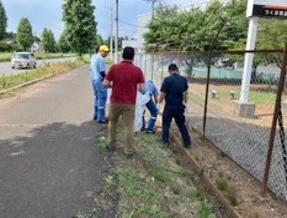
Clean-up activities around sites
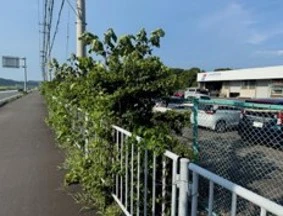
Tree-planting establishment around sites (Before)
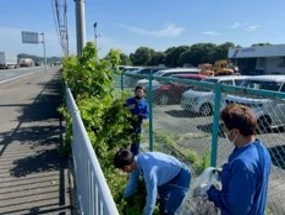
Tree-planting establishment around sites (After)
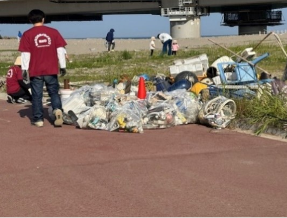
Community cleanup volunteer activities
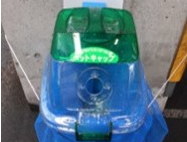
Eco cap activity
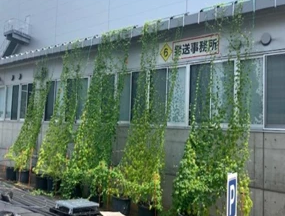
Green curtain installation
Overseas environmental activities
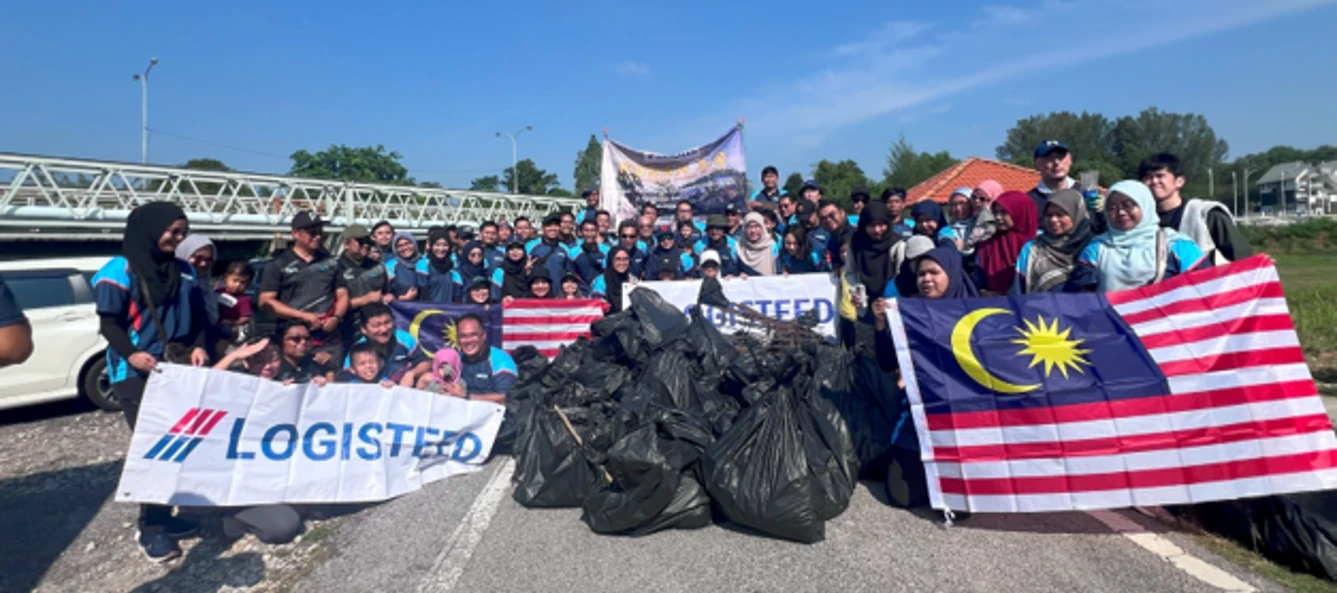
Three group companies in Malaysia* jointly held a cleanup event in August 2025, with approximately 100 volunteers, primarily employees, participating. This event was cosponsored by the Department of Irrigation and Drainage of Hulu Langat District, Selangor. On the day, the volunteers collected approximately 250 kilograms of waste, mainly along the river, and disposed of it appropriately. Moving forward, our group will continue to promote activities that contribute to ecosystem conservation together with local communities.
*LOGISTEED Malaysia Sdn. Bhd., LOGISTEED Forwarding Malaysia Sdn. Bhd., LOGISTEED Solutions Asia-Pacific Sdn. Bhd.